What Is a Mirrorless Camera? Features, Pros, Cons & DSLR Comparison
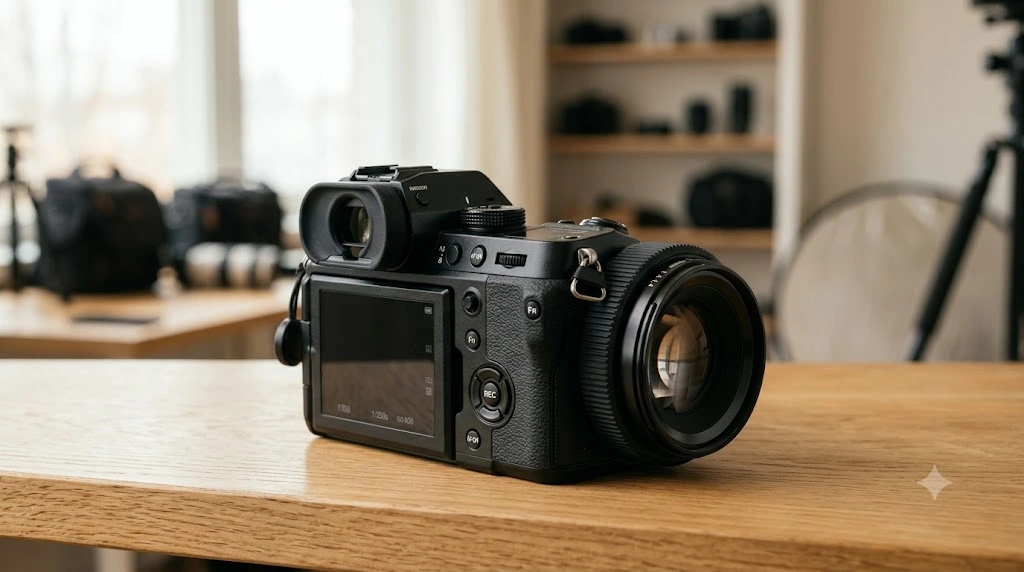
If you’ve started looking for a new camera, you’ve probably come across the term mirrorless camera everywhere. Maybe you’ve watched YouTube reviews, compared camera models, or visited photography forums, only to end up more confused than when you started. Many beginners struggle to understand what makes a mirrorless camera different from a DSLR and whether it’s actually worth the investment.
That confusion is completely understandable. Camera brands often focus on technical specifications like autofocus points, sensor sizes, frame rates, and image processors, but they rarely explain what those features mean in everyday photography. As a result, many people worry about buying the wrong camera or spending money on features they may never use.
The good news is that understanding mirrorless cameras is much easier than it seems. Once you know how they work and what practical advantages they offer, choosing the right camera becomes far less overwhelming. Whether you want to capture family memories, travel photos, wildlife, sports, or professional-quality videos, understanding the basics will help you make a confident decision.
This guide explains everything in simple language based on how mirrorless cameras work in real-world photography-not just technical specifications. By the end, you’ll understand what a mirrorless camera is, how it compares with a DSLR, its advantages and disadvantages, and whether it’s the right choice for your photography goals.
Quick Takeaways
- A mirrorless camera captures images without using a moving mirror.
- It provides a live preview through an electronic viewfinder (EVF) or LCD screen.
- Mirrorless cameras are generally smaller and lighter than DSLRs.
- Many models offer fast autofocus, silent shooting, and excellent video features.
- They are suitable for beginners, hobbyists, professionals, and content creators.
- Choosing between a mirrorless camera and a DSLR depends on your photography needs, budget, and preferred shooting style.
Overview: What Is a Mirrorless Camera?
A mirrorless camera is a digital camera that captures light directly on its image sensor without using a moving mirror. Unlike a DSLR, which reflects light through a mirror into an optical viewfinder, a mirrorless camera sends light straight to the sensor.
The sensor then creates a live digital preview that appears on the rear LCD screen or an electronic viewfinder (EVF). This design removes the need for a bulky mirror mechanism and allows the camera body to be smaller and lighter.
The name “mirrorless” simply describes the absence of the mirror found inside DSLR cameras. Even without this mirror, mirrorless cameras still support interchangeable lenses, giving photographers the freedom to use different lenses for portraits, landscapes, sports, wildlife, or video.
If you’re buying your first camera, don’t worry about understanding every technical term right away. Most modern mirrorless cameras include automatic shooting modes that make them easy to use while giving you room to learn more advanced photography over time.
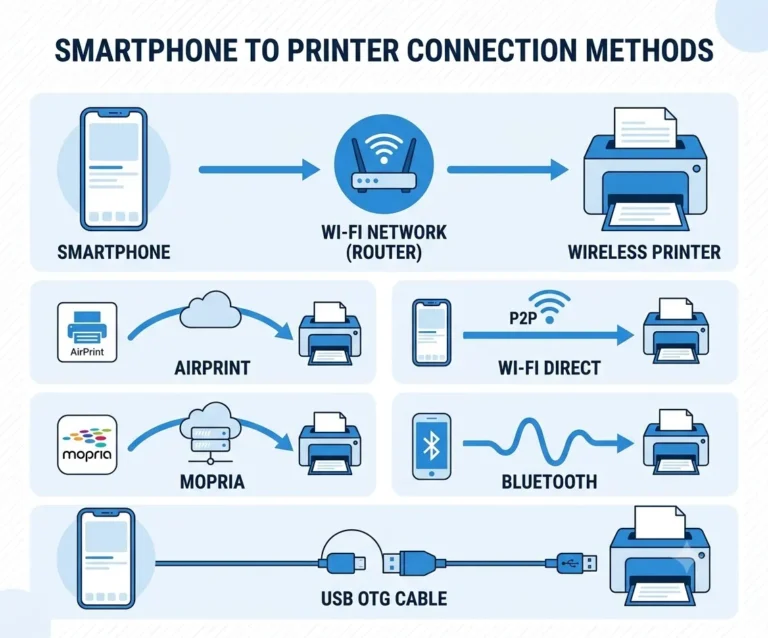
Once you’ve captured your photos, you may also want to print them at home, and our guide on how to print from your phone explains how to print pictures directly from your Android or iPhone.
The Ins and Outs of the Mirrorless Camera
To understand how a mirrorless camera works, it helps to know what happens when you press the shutter button. Light enters through the camera lens and travels directly to the image sensor.
The sensor captures the light, processes the image, and displays a live preview on the LCD screen or through the electronic viewfinder (EVF). Because there is no mirror blocking the light, the sensor is always active while the camera is turned on.
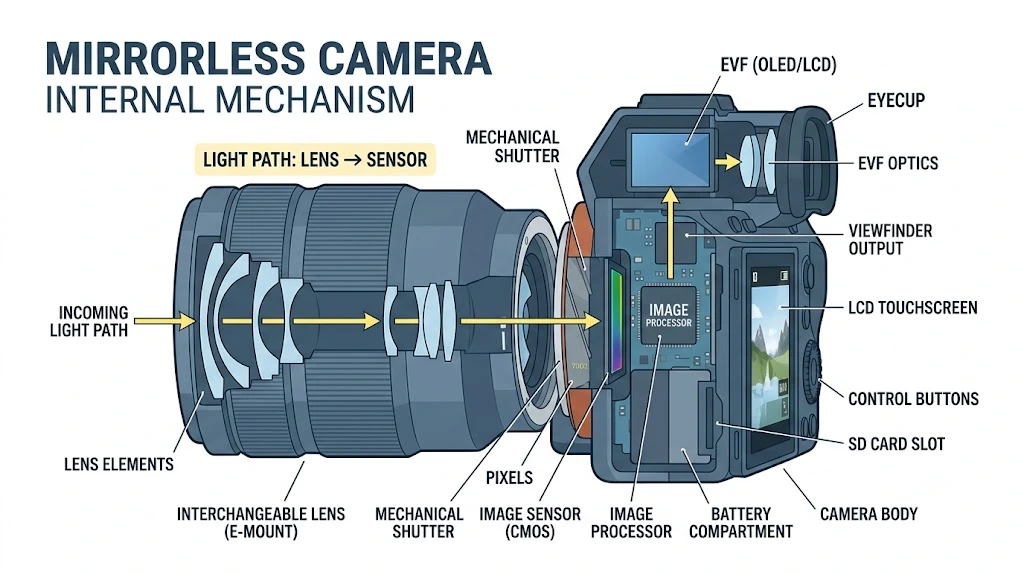
A DSLR works differently. It uses a mirror placed between the lens and the image sensor, reflecting light upward into an optical viewfinder so you can see the scene through the lens.
When you press the shutter button, the mirror flips up for a split second so light can reach the sensor and capture the photo. After the image is taken, the mirror moves back into its original position.
Removing the mirror gives mirrorless cameras several practical benefits. The camera body can be made smaller and lighter, making it easier to carry during travel or long photo sessions.
The simpler internal design also allows manufacturers to add new technologies, such as advanced autofocus and improved video features, without increasing the camera’s size.
One of the biggest advantages of a mirrorless camera is its electronic viewfinder. Instead of showing an optical image, the EVF displays a digital preview created by the image sensor.
This means you can see how changes to exposure, white balance, picture style, and depth of field will affect your final photo before pressing the shutter. It reduces guesswork and helps beginners learn camera settings more quickly.
Modern mirrorless cameras are available with different sensor sizes to match different budgets and photography styles. Entry-level models often use APS-C or Micro Four Thirds sensors, while advanced cameras feature full-frame sensors that deliver excellent image quality, improved low-light performance, and a wider dynamic range. Some professional systems even use medium-format sensors for maximum detail and resolution.
Autofocus technology has improved rapidly in recent years. Many mirrorless cameras now use on-sensor phase-detection autofocus with intelligent subject recognition.
Features such as Eye AF, Face Detection, Animal Eye AF, and Vehicle Tracking help the camera keep moving subjects sharp. These tools are especially useful for portraits, wildlife, sports, and video recording.
Mirrorless cameras are also known for their strong video performance. Since the image sensor is always active, continuous autofocus during video recording is smooth and accurate.
Many models support 4K or even 8K recording, high frame rates for slow-motion footage, in-body image stabilization (IBIS), and advanced video profiles for professional editing. These features have made mirrorless cameras a popular choice among content creators and filmmakers.
Battery life is one area where mirrorless cameras still differ from many DSLRs. Because the sensor, electronic viewfinder, and rear screen remain active during use, they consume more power.
However, battery technology continues to improve, and many current mirrorless cameras can capture hundreds or even thousands of photos on a single charge under normal shooting conditions. Carrying an extra battery is still a good idea for long photography sessions.
The controls on modern mirrorless cameras are designed to be familiar and easy to use. Most models include customizable buttons, touchscreens, quick menus, and control dials that allow photographers to adjust settings quickly.
If you are switching from a DSLR made by the same manufacturer, the learning curve is usually short because the button layout and menu system are often very similar.
Lenses
One of the biggest advantages of a mirrorless camera is the ability to change lenses. Instead of using one fixed lens, you can attach different lenses to match the type of photography you enjoy.
A wide-angle lens is great for landscapes and architecture, while a telephoto lens helps you capture wildlife and sports from a distance. Portrait photographers often choose prime lenses because they produce sharp images and beautiful background blur.
Most mirrorless cameras use a dedicated lens mount designed for their camera system. Canon, Sony, Nikon, Fujifilm, Panasonic, and OM System all offer a wide range of native lenses.
These lenses are built to work with the camera’s autofocus system and image stabilization features, helping you get the best possible performance and image quality.
If you already own DSLR lenses, you may not need to replace them immediately. Many camera brands provide official lens adapters that allow DSLR lenses to work on mirrorless camera bodies.
In most cases, autofocus and image quality remain very good, although some older lenses may focus more slowly or lose a few advanced features. This makes switching to a mirrorless system easier for photographers who already have a collection of lenses.
Third-party lens manufacturers have also expanded their mirrorless lens options. Companies such as Sigma, Tamron, Samyang, and Viltrox now produce high-quality lenses for many popular mirrorless camera systems, often at a lower price than native options.
The size of a mirrorless lens depends on its design rather than the camera body itself. Small prime lenses are lightweight and easy to carry, making them ideal for travel and everyday photography.
Professional zoom lenses, such as a 70-200mm or 100-400mm, are still large because the optics needed for long focal lengths remain the same. Even so, many mirrorless systems are lighter overall than similar DSLR setups.
Choosing the right lens is often more important than choosing the camera body. A good lens can improve sharpness, low-light performance, color accuracy, and background separation.
Before buying a mirrorless camera, consider the range of lenses available for that system and think about the type of photography you plan to do. Building your lens collection over time is usually a better investment than upgrading your camera body frequently.
Advantages and Disadvantages
Every camera system has strengths and limitations, and mirrorless cameras are no different. They offer many modern features that make photography and video easier, but there are also a few factors to consider before making a purchase.
Understanding both the advantages and disadvantages will help you choose a camera that fits your needs and budget.
Advantages
One of the biggest benefits is the electronic viewfinder (EVF). It shows a live preview of your image before you press the shutter button, letting you see changes to exposure, white balance, picture style, and depth of field in real time. This feature helps beginners learn faster and allows experienced photographers to work more efficiently.
Many models include Eye AF, Face Detection, Animal Eye AF, and subject tracking that keep moving subjects in focus – useful for portraits, sports, wildlife, and event photography.
Image quality is another major advantage. Most mirrorless cameras use the same APS-C or full-frame sensors found in DSLR cameras, producing sharp images, rich colors, excellent dynamic range, and strong low-light performance. The camera’s sensor and lens have a much greater impact on image quality than the presence or absence of a mirror.
Mirrorless cameras are also excellent for video recording. Many models support 4K or 8K video, high frame rates, advanced autofocus during recording, and in-body image stabilization (IBIS), making them a popular choice for YouTubers, vloggers, filmmakers, and content creators.
Another advantage is silent shooting. Many mirrorless cameras include an electronic shutter that allows you to take photos with little or no shutter noise, useful during weddings, concerts, school events, and wildlife photography.
Disadvantages
Battery life is one of the most common drawbacks of mirrorless cameras. Because the image sensor and electronic viewfinder remain active while the camera is in use, they consume more power than an optical viewfinder in a DSLR. Carrying one or two spare batteries is recommended for long shoots.
Mirrorless cameras can also cost more than comparable DSLR models, especially once you factor in lenses and accessories. Although entry-level options are becoming more affordable, professional mirrorless systems often require a larger investment.
Some photographers still prefer the optical viewfinder found in DSLR cameras. An electronic viewfinder depends on a digital display, and while modern EVFs are bright and responsive, a few users may notice slight lag in very low light or fast action.
Lens availability has improved significantly, but it can still vary between camera brands. Popular mirrorless systems have a wide selection of native and third-party lenses, while newer systems may offer fewer choices, so it’s worth checking availability before you buy.
Overall, the advantages of mirrorless cameras outweigh the disadvantages for many photographers. Their compact design, advanced autofocus, strong image quality, and excellent video performance have made them the preferred choice for beginners and professionals alike.
Who Should Buy a Mirrorless Camera?
A mirrorless camera is a great choice for anyone who wants better image quality and more creative control than a smartphone can provide. It suits beginners especially well, since many models include easy automatic modes alongside manual settings for when your skills improve.
Mirrorless cameras are also an excellent option for photographers who shoot portraits, wildlife, sports, or events. Features such as Eye Autofocus, subject tracking, fast burst shooting, and silent electronic shutters make it easier to capture sharp images in challenging situations.
If you already own a DSLR and are happy with its performance, there may be no immediate need to switch. But if you’re buying your first interchangeable lens camera or planning to upgrade, a mirrorless camera is often the more future-ready choice, since manufacturers continue to invest heavily in new mirrorless bodies, lenses, and accessories.
| If You Are… | Mirrorless Camera Recommendation |
| Beginner | ✅ Excellent choice |
| Smartphone user | ✅ Strong upgrade |
| Traveler | ✅ Lightweight and portable |
| YouTuber / Vlogger | ✅ Great for video and autofocus |
| Portrait photographer | ✅ Eye AF is very useful |
| Wildlife photographer | ✅ Fast tracking and burst shooting |
| Sports photographer | ✅ Excellent for action |
| DSLR owner | ✅ Consider switching when upgrading |
| Casual family photographer | ✅ Easy to learn and use |
What Is the Main Difference Between DSLR and Mirrorless Cameras?
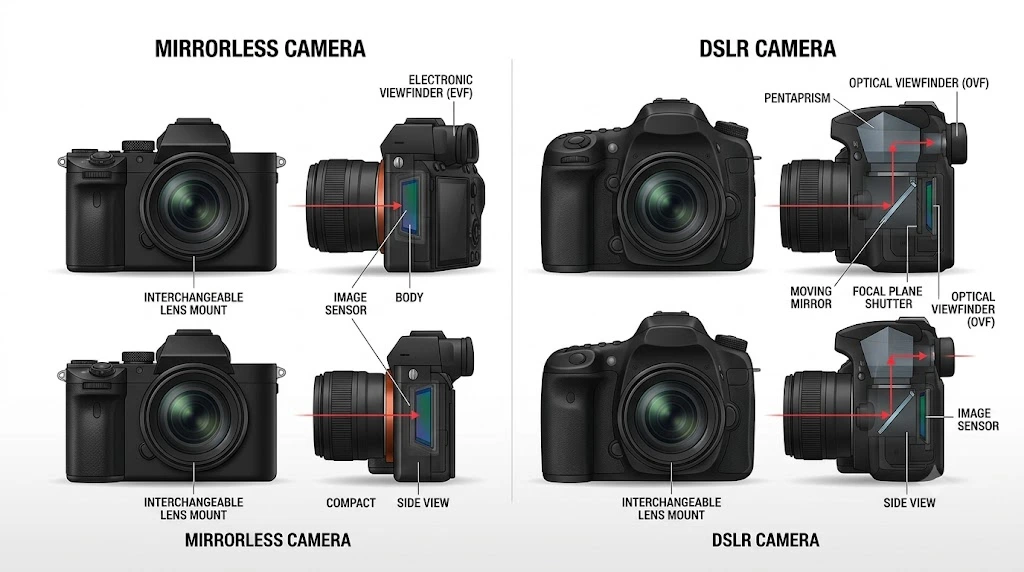
The biggest difference between a DSLR and a mirrorless camera is the way they capture and display light. A DSLR uses a mirror and an optical viewfinder to let you see through the camera lens before taking a photo.
When you press the shutter button, the mirror flips up, allowing light to reach the image sensor. This design has been used for many years and is known for its reliability and long battery life.
A mirrorless camera works without a moving mirror. Instead, light passes directly through the lens to the image sensor, which creates a live digital preview on the rear LCD screen or an electronic viewfinder (EVF). Because there are fewer moving parts, mirrorless models are usually smaller, lighter, and quieter than DSLRs.
Although the internal design is different, both camera types can produce excellent image quality. The quality of your photos depends more on the sensor, lens, lighting, and photography skills than on whether the camera is mirrorless or a DSLR.
Another important difference is size and portability. Without the mirror box and optical viewfinder, mirrorless cameras can be designed with a more compact body, making them easier to carry while traveling, hiking, or covering long events such as weddings.
Today, most major camera manufacturers continue to develop and expand their mirrorless systems. While DSLR cameras remain a great option for many users, mirrorless technology has become the primary focus for companies such as Canon, Sony, Nikon, Fujifilm, Panasonic, and OM System.
The table below highlights the key differences between the two camera systems.
| Feature | Mirrorless Camera | DSLR Camera |
| Mirror Mechanism | No mirror | Uses a moving mirror |
| Viewfinder | Electronic Viewfinder (EVF) or LCD | Optical Viewfinder (OVF) |
| Camera Size | Smaller and lighter | Larger and heavier |
| Autofocus | Fast on-sensor autofocus with subject tracking | Reliable autofocus with dedicated AF system |
| Video Performance | Excellent for 4K, 6K, and 8K video | Good, but often less advanced |
| Silent Shooting | Available with electronic shutter | Limited on most models |
| Battery Life | Shorter because the sensor and EVF stay active | Longer due to the optical viewfinder |
| Lens Compatibility | Native mirrorless lenses and adapters available | Large selection of DSLR lenses |
| Best For | Travel, video, content creation, wildlife, portraits | Sports, traditional photography, long shooting sessions |
Many people also compare a mirrorless camera with a smartphone. While today’s smartphones use advanced computational photography to improve image quality, mirrorless cameras offer larger image sensors, interchangeable lenses, better low-light performance, true optical zoom, and full manual controls.
If you’ve only used a smartphone for photography, a mirrorless camera gives you much more creative control. You can change lenses, adjust settings like shutter speed and aperture, and capture better-quality images in low light.
Size: DSLRs Are Bigger and Mirrorless Cameras Are Smaller and Lighter
One of the first differences most people notice is the size of the camera. Mirrorless cameras are generally smaller and lighter because they do not need a mirror box or an optical viewfinder.
With fewer internal parts, manufacturers can design more compact camera bodies without reducing image quality, making mirrorless cameras easier to carry and more comfortable to use throughout the day.
A lighter camera is especially useful for photographers who spend many hours shooting. Wedding photographers, travel photographers, vloggers, and outdoor photographers often carry their equipment for long periods, and even a small reduction in weight can make a noticeable difference during a full day of photography.
The compact design of a mirrorless camera also makes it easier to pack when traveling. It takes up less space in a camera bag, backpack, or carry-on luggage, which is ideal if you enjoy hiking, street photography, or family vacations.
However, a smaller body does not always mean the entire camera system is lightweight. Professional telephoto and zoom lenses can still be large because they require bigger glass elements – a 70-200mm or 100-400mm lens remains a similar size whether it’s built for a DSLR or a mirrorless camera.
Some photographers also prefer the larger grip of a DSLR, especially when using heavy lenses, since bigger bodies can provide better balance and a more secure hold during long shoots.
For most beginners and hobbyists, the smaller size of a mirrorless camera is a major advantage. It’s easier to carry, simpler to store, and more convenient for everyday and travel photography.
Autofocus Speed: Both Have Good Autofocus, but There Are Features Only Available on Mirrorless
Autofocus has improved greatly over the years, and both DSLR and mirrorless cameras can focus quickly and accurately. A DSLR uses a dedicated autofocus system when you look through the optical viewfinder.
Mirrorless cameras use on-sensor autofocus, which allows them to analyze the entire scene in real time. This technology helps the camera lock focus quickly, even when the subject is moving.
One of the biggest advantages of a mirrorless camera is intelligent subject tracking. Many modern models include Eye AF, Face Detection, Animal Eye AF, and Vehicle Tracking, which automatically detect and follow the subject, helping photographers capture sharp images with less effort.
Portrait photographers particularly benefit from Eye Autofocus because it keeps the subject’s eyes sharp even when they move, letting them focus more on composition and lighting instead of constantly adjusting focus manually.
Image Stabilization: The Steadiness of a Mirrorless Is Unmatched
Image stabilization helps reduce blur caused by camera shake. Many mirrorless cameras include in-body image stabilization (IBIS), which moves the image sensor to compensate for small movements while taking photos or recording videos.
This feature allows photographers to shoot at slower shutter speeds without losing sharpness.
For video creators, image stabilization provides smoother handheld footage and reduces unwanted camera movement. Although some DSLR cameras and lenses also offer stabilization, many mirrorless systems combine in-body stabilization with lens stabilization for even better results.
Quality: There’s No Noticeable Difference
Many people believe that mirrorless cameras automatically produce better image quality than DSLRs, but that isn’t always true. Image quality depends mainly on the sensor, lens, lighting conditions, and the photographer’s skills.
A mirrorless camera and a DSLR with similar sensor sizes can produce nearly identical results. These sensors deliver excellent detail, accurate colors, wide dynamic range, and impressive low-light performance – and choosing a quality lens often has a greater impact on your final image than choosing between a mirrorless camera and a DSLR.
Image Speed: Mirrorless Has a Clean Advantage
Mirrorless cameras are known for their fast continuous shooting speeds. Without a moving mirror, they can capture more frames per second while maintaining accurate autofocus, making them ideal for photographing sports, birds, wildlife, and other fast-moving subjects.
Fast shooting speeds matter most for sports and wildlife photography, where subjects move quickly and every fraction of a second counts. Combined with advanced subject tracking, mirrorless cameras help photographers capture moments that are easy to miss with slower shooting speeds.
Battery Life: DSLRs Are Better, but Mirrorless Is Improving
Battery life has traditionally been one of the strongest advantages of DSLR cameras. Because they use an optical viewfinder instead of an electronic display, they consume less power during normal use, often capturing more photos on a single charge than a comparable mirrorless camera.
However, battery performance has improved significantly in recent years. Many current mirrorless models can capture hundreds or even thousands of photos on a single charge under normal conditions, though carrying an extra battery is still recommended for extended sessions.
Price: DSLRs Are Lower Cost Than Mirrorless
Your budget is an important factor when choosing a camera. Entry-level DSLR cameras are often available at lower prices, especially in the used market, making them an attractive option for beginners learning photography.
Mirrorless cameras generally cost more because they include newer technology, advanced autofocus systems, faster processors, and improved video capabilities. Lens prices may also be higher depending on the camera system you choose.
When comparing prices, remember to consider the complete camera system – the body, lenses, memory cards, batteries, a camera bag, and other accessories. Looking at the total investment will help you choose the option that offers the best long-term value.
Common Mistakes When Buying a Mirrorless Camera
- Buying a camera body without planning for lenses.
- Choosing a camera based only on megapixels.
- Ignoring battery life and storage needs.
- Buying features you’ll rarely use.
- Not checking the available lens ecosystem.
At the End of the Day, We Are Big Mirrorless Fans!
Mirrorless cameras have become the preferred choice for many photographers because they combine excellent image quality with modern technology. Whether they are the right choice depends on your photography style, budget, and long-term needs.
That said, a DSLR is still a reliable option for many photographers. If you already own DSLR lenses or prefer an optical viewfinder and longer battery life, a DSLR may continue to meet your needs. Both systems can produce outstanding results when paired with the right lens and good photography techniques.
Our Specific Recommendations
If you are buying your first mirrorless camera, focus on choosing a model that matches your experience level, photography style, and budget. Beginners often benefit from an entry-level APS-C mirrorless camera because it offers excellent image quality, easy controls, and a more affordable price.
Before buying your first mirrorless camera, avoid focusing only on the camera body. Many beginners spend most of their budget on the newest camera while overlooking the importance of quality lenses – a good lens often has a greater impact on image quality than a more expensive body.
Students learning photography often benefit from an entry-level mirrorless camera because it offers manual controls alongside automatic shooting modes, helping them build confidence while gradually learning exposure, focusing techniques, and composition.
Before You Buy a Mirrorless Camera
✔ Decide what you’ll photograph most often.
✔ Choose a camera system with lenses you’ll want in the future.
✔ Don’t spend your entire budget on the camera body.
✔ Buy at least one extra battery.
✔ Hold the camera before buying if possible.
✔ Consider the total cost, including lenses and accessories.
Frequently Asked Questions
What is a mirrorless camera in simple words?
A mirrorless camera is a digital camera that does not use the moving mirror found inside a DSLR. Instead, light passes directly through the lens to the image sensor, which creates a live preview on the LCD screen or electronic viewfinder. This design makes mirrorless cameras smaller, lighter, and packed with modern features.
Is a mirrorless camera better than a DSLR?
Neither camera is better for everyone. Mirrorless cameras offer faster autofocus, silent shooting, and advanced video features, while DSLR cameras usually provide longer battery life and an optical viewfinder. The right choice depends on your budget, photography style, and personal preference.
Are mirrorless cameras good for beginners?
Yes. Many beginners choose mirrorless cameras because they are easy to use and provide a live preview of exposure and camera settings before taking a photo. Features such as Eye Autofocus and automatic subject tracking also make learning photography much easier.
Why are mirrorless cameras becoming more popular?
Mirrorless cameras continue to gain popularity because they combine excellent image quality with modern technology. They are compact, lightweight, and include advanced autofocus, high-speed shooting, in-body image stabilization, and powerful video recording features.
Do professional photographers use mirrorless cameras?
Yes. Many professional photographers use mirrorless cameras for weddings, sports, wildlife, fashion, commercial photography, and filmmaking. Fast autofocus, silent shooting, and reliable subject tracking make them suitable for demanding professional work.
Can I use DSLR lenses on a mirrorless camera?
Yes. Many camera brands offer lens adapters that allow DSLR lenses to work on compatible mirrorless camera bodies. Depending on the lens and adapter, autofocus and other functions usually continue to work, although performance may vary slightly.
Do mirrorless cameras have better image quality?
Image quality depends more on the camera’s sensor, lens, lighting, and the photographer’s skills than on whether the camera is mirrorless or a DSLR. A mirrorless camera and a DSLR with similar sensor sizes can produce equally impressive photos.
How long does a mirrorless camera last?
A well-maintained mirrorless camera can last for many years. Most cameras are designed with durable shutters and can handle hundreds of thousands of shutter actuations. Regular cleaning, firmware updates, proper storage, and careful handling can help extend the camera’s lifespan.
Are mirrorless cameras worth buying?
For most people, yes. Mirrorless cameras offer a balance of portability, image quality, fast autofocus, and advanced video features. If you want a camera system that continues to receive new lenses and technology updates, a mirrorless camera is a smart long-term investment.
What should I look for when buying a mirrorless camera?
Before buying a mirrorless camera, consider your budget, sensor size, autofocus performance, available lenses, battery life, video features, and future upgrade options. Choosing a camera that matches your photography goals will give you the best value and a better shooting experience.
In Conclusion
A mirrorless camera isn’t automatically the best camera for everyone, but for many photographers, it offers an excellent balance of image quality, portability, modern autofocus, and video performance. The right choice ultimately depends on what you enjoy photographing, how you like to shoot, and the equipment that fits your budget and long-term goals.
One lesson experienced photographers often share is that great photos come from understanding your camera—not simply buying the newest model. A camera with features that match your needs will usually serve you better than one with specifications you’ll rarely use. Spending time learning composition, lighting, and camera settings will have a much bigger impact on your photography than chasing the latest technology.
If you’re buying your first interchangeable lens camera or planning to upgrade from an older system, take time to compare the available lenses, ergonomics, battery life, and features that matter most for the type of photography you enjoy. Making an informed decision now can save money and help you build a camera system that continues to support your skills as you grow.
Whether you choose a mirrorless camera or a DSLR, the best camera is the one that encourages you to get outside, practice regularly, and enjoy the process of creating great photographs. Understanding how mirrorless cameras work gives you the knowledge to choose with confidence instead of relying on marketing claims alone.